One till for your museum cafe, theatre bar or music venue, built for the quiet hours and for the crush around a performance. 20Tabs moves with the flow of your visitors and gets a full foyer served in the interval.
The curtain comes down and the foyer fills up. An hour later it is quiet again. Your till has to cope with that shape without a queue forming, and without leaving you on a fast-food screen for the rest of the evening.
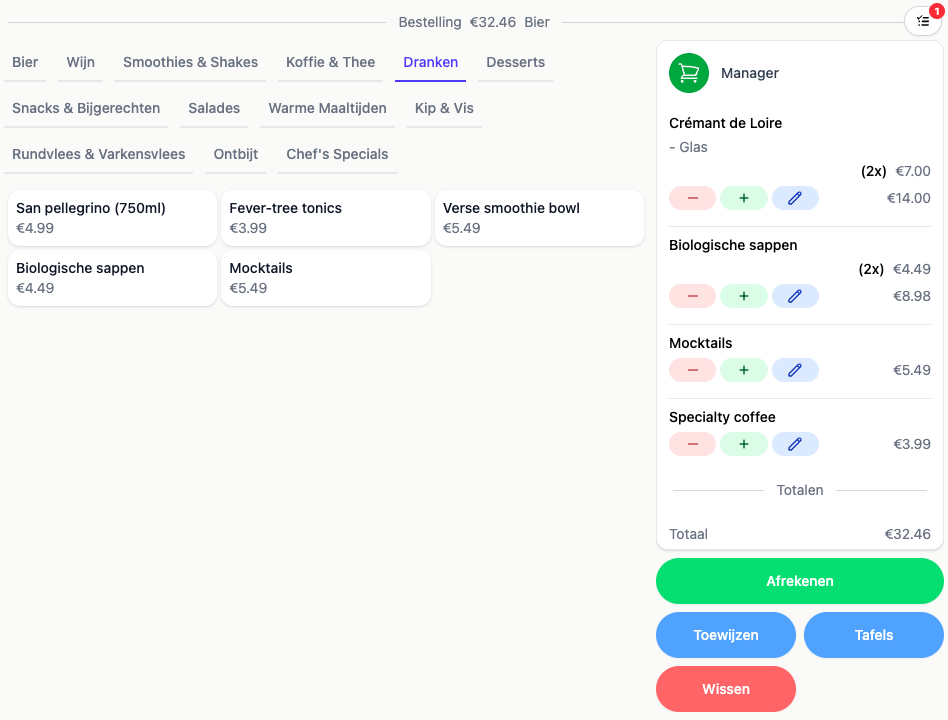
Whatever moves fastest in the interval is yours to put on the main screen. Two taps and take payment, with no hunting through categories while thirty people queue behind each other.
A sold-out house or an opening calls for an extra bar. You put a device out for as long as it is needed and take it away afterwards, with no charge per terminal and no second subscription.
If you want to keep the queue short, you put a self-ordering screen in the foyer. Visitors order and pay themselves, and your bar gets on with pouring rather than taking orders.
Cultural venues often run on volunteers and stand-ins, in a different mix every evening. That calls for a till that explains itself and that keeps track of who did what.
A volunteer signs in with a personal PIN and signs out when their shift ends. At the end of the evening you can see per bill who rang it in.
You decide who may give discounts, amend bills or get into the back office. So everyone can serve without everyone having access to everything.
Anyone who can use a phone can use this. A new volunteer works their first evening straight away, with no crib sheet next to the till.
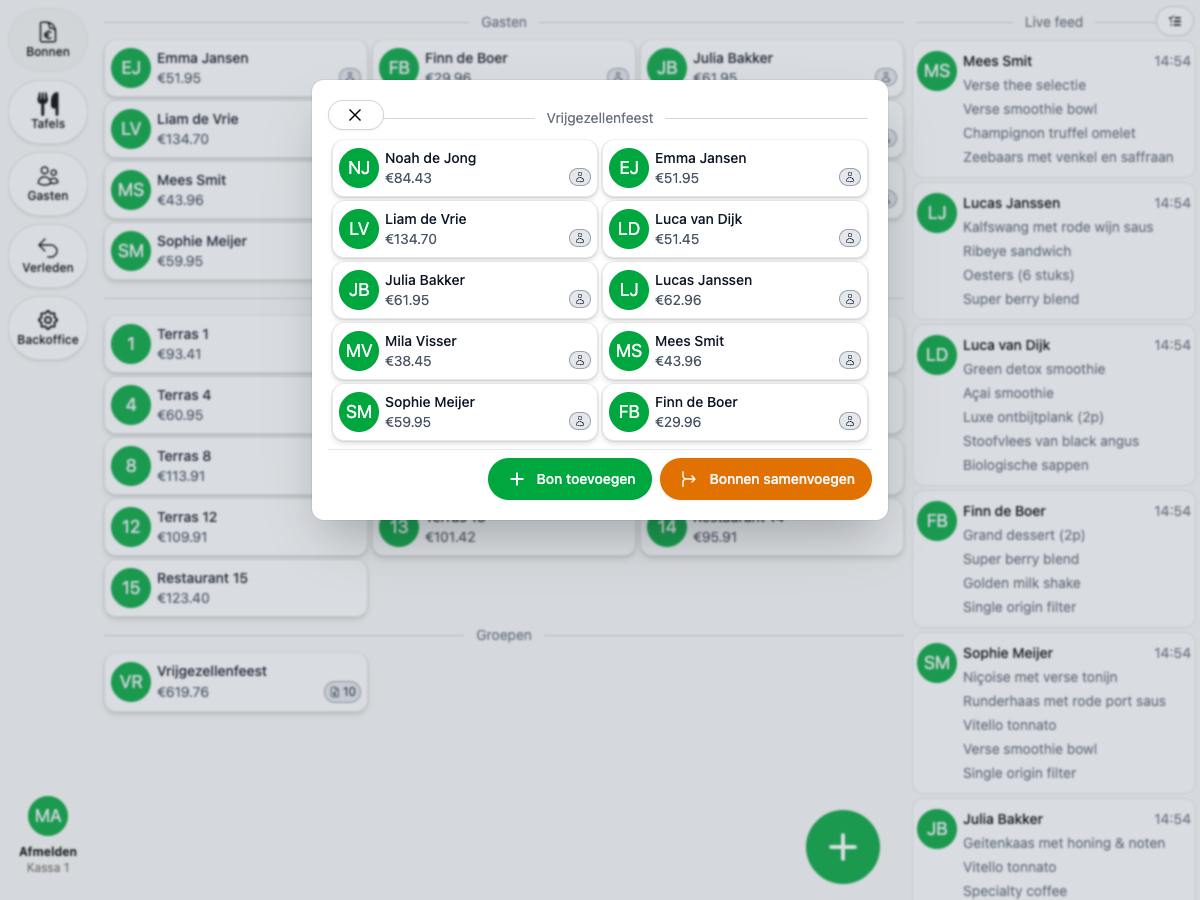
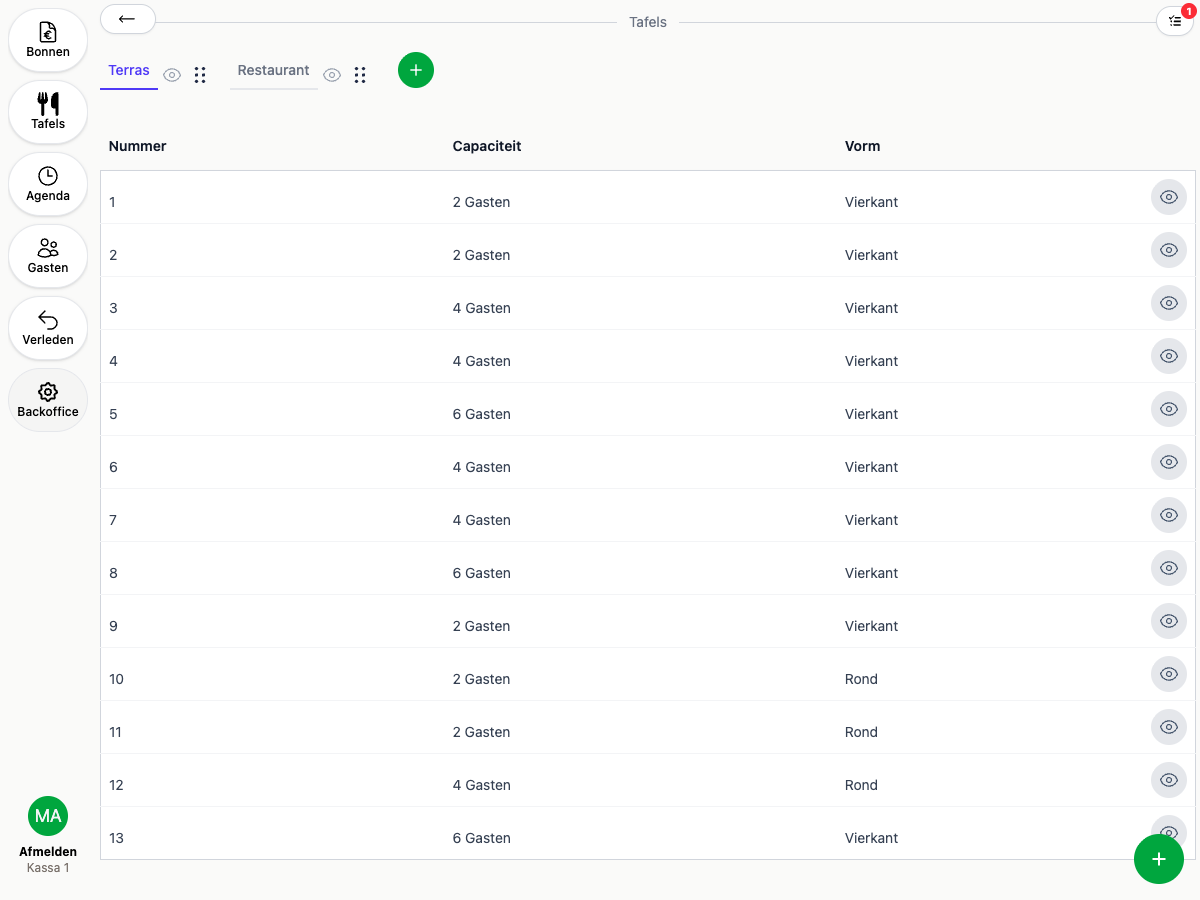
You lay out each space separately and see the revenue per place. A bar that only opens for a performance is one you switch on when you need it.
The peak calls for speed, but the rest of the evening does not call for a shouty screen. 20Tabs is deliberately quiet by design: it suits the feel of a foyer or museum cafe, even with a visitor looking on.
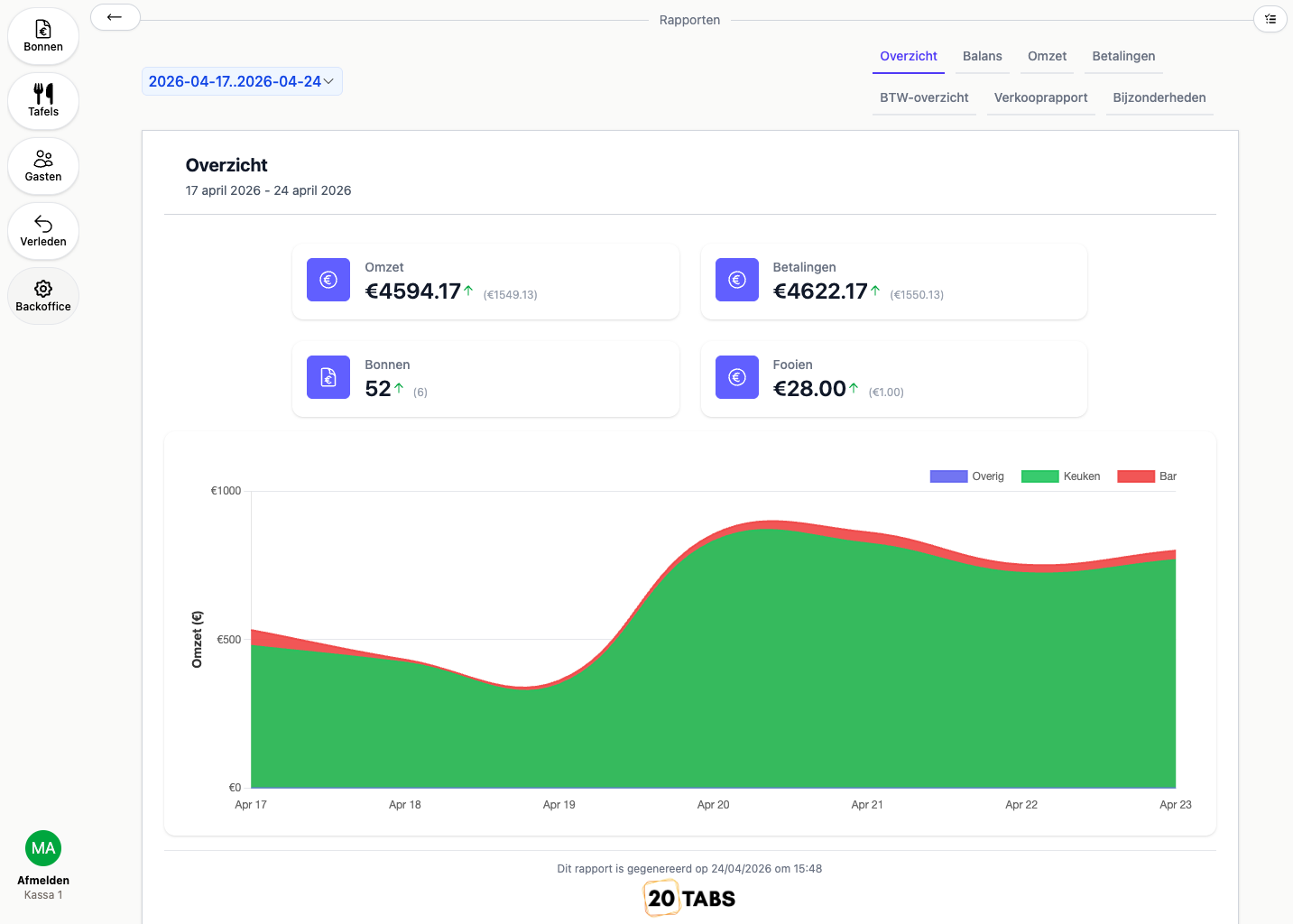
Your board, trust or funding body wants to know where the money came from. Your reports show the hospitality revenue per period and per space, in one place and without anyone having to ask.
A museum cafe, theatre bar or music venue runs to a different rhythm than an ordinary hospitality business. The rush hangs on performances, opening hours and exhibitions, not on a natural lunch or evening pattern. For a quarter of an hour the foyer is full of people who all want a drink at once, and the rest of the evening is quiet. That is exactly the rhythm an ordinary till comes unstuck on.
A good till for a cultural venue has to handle that peak without the staff seizing up. Quick payment during the interval with your most popular drinks on the main screen, but without the busy, pushy interface of a fast-food chain. That does not suit the feel of a foyer or a museum cafe. 20Tabs is deliberately designed for that: fast where it has to be, calm where it can be.
On top of that, who is working varies by evening. Volunteers, stand-ins and permanent staff all mix behind the bar, often only a few evenings a month. A till that explains itself then saves you a briefing per person. Everyone works under their own PIN and you decide per role who may give discounts or get into the back office, so at the end of the evening you can see who rang in which bill without having to look over anyone's shoulder.
Beyond the bar itself, accountability counts for a cultural venue. A board or trust has to be able to show where the money came from, particularly to a funding body. Your reports therefore sit in one place: the hospitality revenue per period, per space and per product, without anyone having to pull figures together.

A till that moves with the flow of your visitors: quiet during the day, busy in the interval or around an opening. It gets that peak served quickly, scales with you without a charge per terminal, and gives you clear reporting for your trust or museum board. And because there are often different volunteers behind the bar, it helps that the interface speaks for itself.
Yes. Your foyer, the cafe and a pop-up bar for a performance all run on the same system, and you see the revenue per space in your reports. During a busy programme you add a device, and afterwards you take it away again.
Everyone signs in with their own PIN, so you can see per bill who rang it in. Per role you decide who may give discounts, amend bills or get into the back office. A new volunteer can start serving straight away, without you having to hand out full access.
Yes. You put a self-ordering screen in the foyer, where visitors order and pay themselves. During the interval that keeps the queue at the bar shorter, and your staff can get on with pouring rather than taking orders.
Between €100 and €500 a month, based on your revenue. No setup fees and no charge per terminal, so you can add a device around an opening or a performance without a second subscription. You can start from €25 a month with 20Tabs Go (plus 2% of revenue).
See reports, staff and the self-service kiosk. Similar places: the POS for cafes & bars, for wine bars or for event venues.
Every feature is unlocked from day one. No contracts to sign, no haggling, no sales calls. Just software that works and that you can set up yourself. Curious how quickly we reply? Hit the chat button in the corner and see for yourself.
Spin up a full account in minutes, with every feature unlocked.
Process your first order within the hour. Our quick-start guide walks you through every step.